Month: November 2021

  • LITHON Home Roaster: The Ultimate Machine for Easy Coffee Bean Roasting at Home

    LITHON Home Roaster: The Ultimate Machine for Easy Coffee Bean Roasting at Home

    LITHON Home Roaster RT-01

    Roasting your own coffee is often thought to be a fairly high hurdle, but in fact there are machines out there that let you do it easily for around 20,000 yen.

    What I want to introduce here is the LITHON Home Roaster RT-01.

    It’s one of the best-known home roasters for doing proper coffee roasting with minimal fuss.

    I had the chance to buy one, and after using it for a while, I’d like to share my impressions.

    What I like

    Green beans are cheap
    You get to drink freshly roasted coffee

    You can roast small amounts, so you never struggle to use it up

    Buying coffee as green beans costs about a quarter of what you’d pay for roasted beans.
    Also, while roasted beans are said to stay good for one to two months, green beans keep for about two years.

    In other words, once you find a bean you like, buying it green lets you get it cheaply and drink it at its best—right after roasting.

    Coffee beans are said to taste best from three days to about two weeks after roasting.
    When you buy beans at a coffee shop, they’re usually sold in 100 g units and at least a day or two has already passed since roasting (much longer at coffee chains), so if you want to drink the coffee at its best, you have to get through that 100 g pretty quickly.

    100 g is roughly ten cups, which is quite a lot for one person even drinking every day.

    This roaster handles 40–60 g of coffee at a time, so you can drink beans in their best condition in amounts you can comfortably finish.

    Roasting is quite a chore to do by hand, but here you just leave it running—which is why I personally like it so much.

    What I don’t like

    It’s fairly noisy
    The roasting smell is quite strong
    You can’t fine-tune the roast level

    The first thing that surprises you is how loud it is in operation.
    It’s loud enough that watching YouTube next to it while it runs is a bit rough.

    It’s not a booming kind of noise, so it’s not unusable in an apartment, but it does make a fair amount of sound and will probably startle you at first.

    As for the roasting smell, this is probably true of any machine: roasting fills the room with a real coffee-shop aroma.

    It’s strong enough that you should ventilate while roasting, and even then the smell lingers for a day.
    It’s a coffee smell, so for coffee lovers it isn’t unpleasant at all—more like a room fragrance—but you might want to avoid roasting when you have guests coming over.

    On not being able to fine-tune the roast level

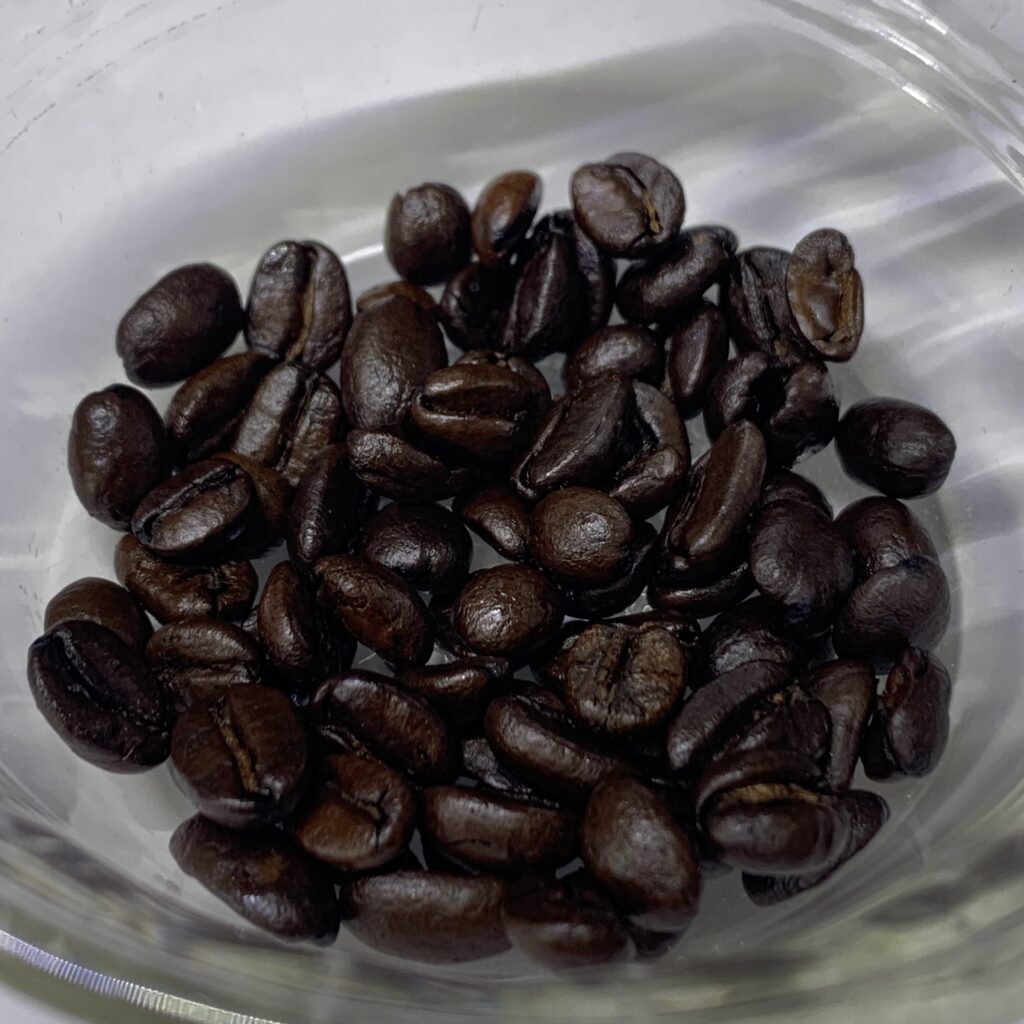
    There are two modes: Medium and Dark.
    Medium gives roughly a medium roast, and Dark roughly a dark roast.
    (In the photos, Medium is on top and Dark below.)

    To be more precise, Medium is about a medium roast and Dark is about a city or French roast.

    The machine can’t produce a medium-dark roast, which is probably the level most people prefer, so if that’s the coffee you want, you may need to get a little creative.

    Overall

    Roasting your own coffee beans is surely something every coffee lover wants to try at least once.

    Downsides aside, I’ve come to like this machine quite a lot and use it regularly.

    The fun of choosing green beans, being able to watch the roast unfold—it really broadens how you enjoy coffee.

    I wouldn’t recommend it to everyone, but if you’re curious about roasting your own coffee and want to give it a try, it’s an easy and relatively affordable way to start—so for those people, I’d recommend it.
  • What Is the Basic Kindle Actually Like?

    What Is the Basic Kindle Actually Like?

    I’d been wanting to read at night, and with Amazon Black Friday on, I decided to buy a Kindle.

    The thing is, there are about four Kindle variants to choose from.

    I used to have a Kindle Paperwhite from a few years back, and the screen was so easy on the eyes even after long stretches that I was leaning toward that one again. But I saw that the basic Kindle also gets good reviews, and since I just plan to use it hard and only read at night, I figured the cheaper one would do and went with the plain Kindle.

    For Black Friday it was marked down from about 9,000 yen to about 5,000 yen.
    On top of that, buying a Kindle device gets you three months of Kindle Unlimited (normally 980 yen/month) for free, so effectively I paid around 2,000 yen for the device.
    What a deal!!!!

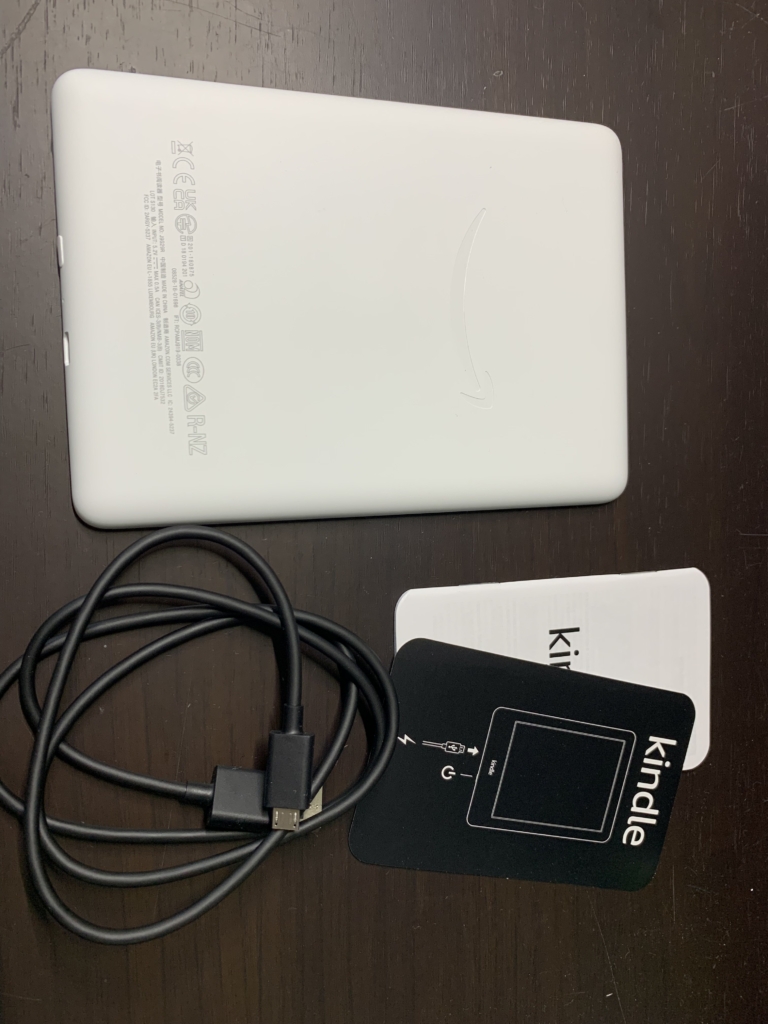
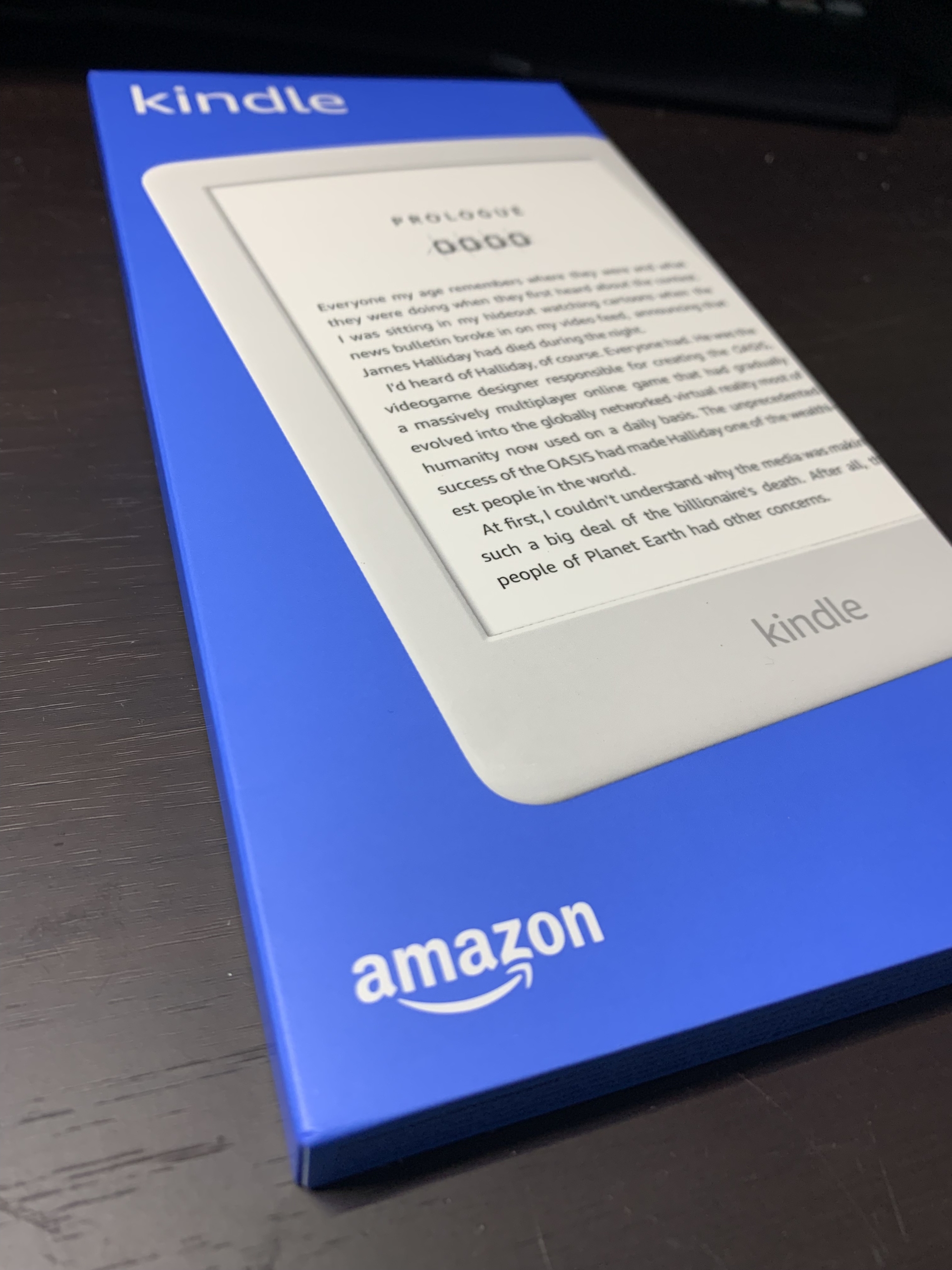
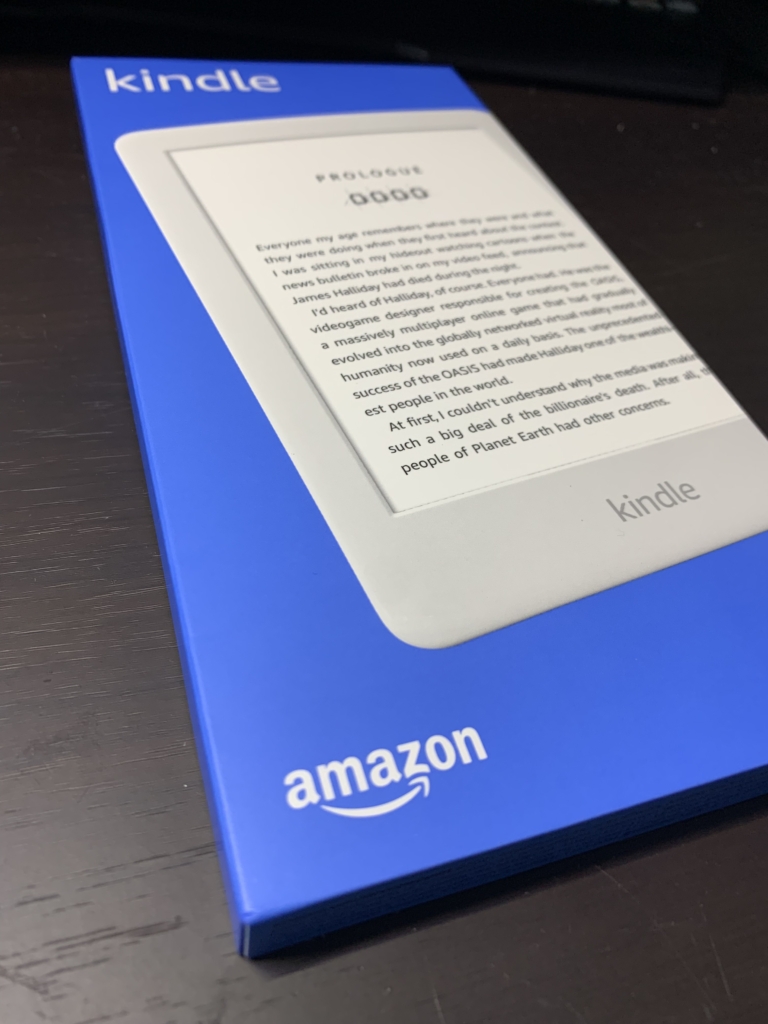
    Here’s the actual Kindle.

    The first thing that struck me when the box arrived was how incredibly thin it is.

    The contents are simple: a charging cable, the device itself, and a manual.
    The cable is micro-USB, which is a bit inconvenient now that USB-C is everywhere, but since you only need to charge about once a week, it’s really not a drawback.

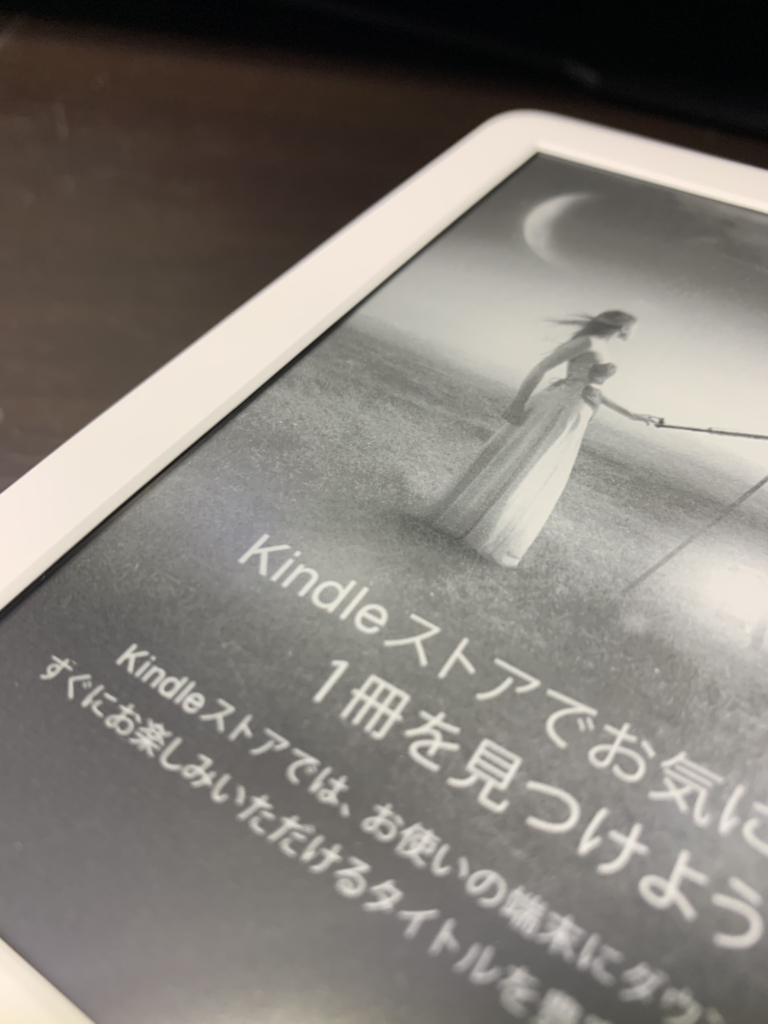
    Unlike the Kindle Paperwhite, the screen uses a front light and has a lower resolution on paper, but you’d only notice that in a side-by-side comparison; in practice the image quality is more than enough for reading.

    Reflections are also kept well in check, and reading at night doesn’t tire my eyes at all. My first impression was that it’s better than I expected.

    What I disliked most about the old Kindle Paperwhite was how sluggish it was; searching for books or turning pages was fairly stressful. This Kindle is noticeably faster than that, roughly like using a slightly older smartphone.

    Given the price gap, whether the other models are worth more than twice as much really depends on the person, but the basic Kindle offers excellent value and works well as an everyday device.

    And because it was cheap, I can use it as hard as I like. I feel like I made a really good purchase.

    You should all go buy one too—kattemitekudasai.

  • Does getting your ears pierced hurt?

    Does getting your ears pierced hurt?

    Introduction

    I got my left earlobe pierced.
    I thought my impressions might be useful for anyone thinking about getting a piercing, so I’m writing them up here.

    This time I didn’t use a piercing gun on myself — I went to a clinic and had it done for me.

    I went to Clinic Bizarrea, near Sakae Station in Nagoya.
    Website
    They have what they call a “Piercing Center,” and it’s a place that comes up almost without fail when you search for clinics to get pierced at in Nagoya.

    What stands out here is how cheap it is: one earlobe piercing, starter earring included, cost me 1,600 yen.
    A piercing gun at Don Quijote runs about 1,000 yen, so for roughly 600 yen more you get to consult someone and have them do it for you — an incredible deal.

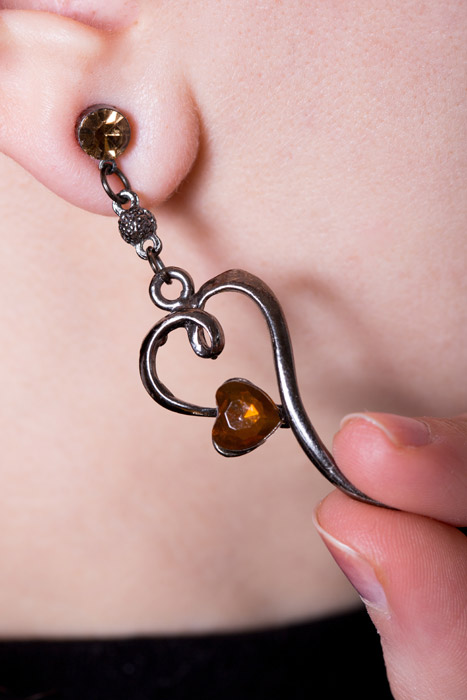
    You can also choose from a variety of starter earrings, so you can have something a bit stylish in from the very beginning.

    That said, if you look up reviews of the Piercing Center, there are both good and bad ones — the staff seem to vary from day to day, and so does the service.
    Basically the piercing itself is done assembly-line style, so there isn’t much room for the service to be good or bad, but it might matter when you want to discuss where to place the piercing.

    Getting pierced

    From arriving at the Piercing Center to actually being pierced took about 20 minutes in total.

    I checked in, picked out an earring, and got a brief explanation.
    I already knew my earlobes were fairly thick, but it’s surprisingly hard to tell how thick they are compared with other people’s.
    That matters because people with thick earlobes have to watch the size when using an over-the-counter piercing gun.

    This Piercing Center has long-type starter earrings for people with thick earlobes, which is reassuring.
    Sure enough, mine were on the thick side, so I ended up with a long-type earring.

    Once I’d chosen an earring, they handed me a marker and asked me to look in the mirror and mark where I wanted the piercing.

    Marking the spot yourself while looking in a mirror is surprisingly hard, and my mark ended up pretty haphazard.
    Earlobes are floppy, and the angle means you’re drawing with your arm bent, so your hand isn’t steady at all. How does everyone manage this…?

    Haphazard as it was, apparently it was good enough — they disinfected the spot, counted 3, 2, 1, and punched it through.
    No numbing or icing, just straight to it.
    It was like bungee jumping, where once you’re on the platform things move along briskly so you don’t have time to get scared. Whether that’s to keep you from getting nervous or just for efficiency, I couldn’t say.

    Afterward they checked the placement, and once I said it looked fine, I was free to go.
    It really was over quickly and smoothly.

    So how much does a piercing actually hurt?

    For the record, the moment of piercing hurt quite a bit, and I could feel the needle passing through my earlobe.
    Who was it that said getting pierced doesn’t hurt?

    It kept hurting moderately for about two hours afterward, and after that there was a persistent odd sensation.
    People used to wearing earrings probably wouldn’t mind that much, but as someone who almost never wears them, even that bothered me a fair bit.

    The pain was a dull ache, entirely bearable.
    Touching the earring doesn’t hurt, and water doesn’t sting when I shower, which I’m grateful for.

    I suspect the reason the needle hurt as much as it did in my case is the thickness of my earlobes.
    So if your earlobes are thin, it may genuinely not hurt at all.

    Either way, it only hurts in that moment, and it’s easy to put up with when you think about the accessories you’ll get to enjoy afterward. Once it’s done, you just think
    “Oh! It’s done!” — and all the dread you felt beforehand vanishes.

    I’m looking forward to thinking about which earrings to wear from here on.

    I want to take proper care of it so it doesn’t get infected.