Category: Gadgets & Reviews

  • LITHON Home Roaster: The Ultimate Machine for Easy Coffee Bean Roasting at Home

    LITHON Home Roaster: The Ultimate Machine for Easy Coffee Bean Roasting at Home

    LITHON Home Roaster RT-01

    Roasting your own coffee is often thought to be a fairly high hurdle, but in fact there are machines out there that let you do it easily for around 20,000 yen.

    What I want to introduce here is the LITHON Home Roaster RT-01.

    It’s one of the best-known home roasters for doing proper coffee roasting with minimal fuss.

    I had the chance to buy one, and after using it for a while, I’d like to share my impressions.

    What I like

    Green beans are cheap
    You get to drink freshly roasted coffee

    You can roast small amounts, so you never struggle to use it up

    Buying coffee as green beans costs about a quarter of what you’d pay for roasted beans.
    Also, while roasted beans are said to stay good for one to two months, green beans keep for about two years.

    In other words, once you find a bean you like, buying it green lets you get it cheaply and drink it at its best—right after roasting.

    Coffee beans are said to taste best from three days to about two weeks after roasting.
    When you buy beans at a coffee shop, they’re usually sold in 100 g units and at least a day or two has already passed since roasting (much longer at coffee chains), so if you want to drink the coffee at its best, you have to get through that 100 g pretty quickly.

    100 g is roughly ten cups, which is quite a lot for one person even drinking every day.

    This roaster handles 40–60 g of coffee at a time, so you can drink beans in their best condition in amounts you can comfortably finish.

    Roasting is quite a chore to do by hand, but here you just leave it running—which is why I personally like it so much.

    What I don’t like

    It’s fairly noisy
    The roasting smell is quite strong
    You can’t fine-tune the roast level

    The first thing that surprises you is how loud it is in operation.
    It’s loud enough that watching YouTube next to it while it runs is a bit rough.

    It’s not a booming kind of noise, so it’s not unusable in an apartment, but it does make a fair amount of sound and will probably startle you at first.

    As for the roasting smell, this is probably true of any machine: roasting fills the room with a real coffee-shop aroma.

    It’s strong enough that you should ventilate while roasting, and even then the smell lingers for a day.
    It’s a coffee smell, so for coffee lovers it isn’t unpleasant at all—more like a room fragrance—but you might want to avoid roasting when you have guests coming over.

    On not being able to fine-tune the roast level

    There are two modes: Medium and Dark.
    Medium gives roughly a medium roast, and Dark roughly a dark roast.
    (In the photos, Medium is on top and Dark below.)

    To be more precise, Medium is about a medium roast and Dark is about a city or French roast.

    The machine can’t produce a medium-dark roast, which is probably the level most people prefer, so if that’s the coffee you want, you may need to get a little creative.

    Overall

    Roasting your own coffee beans is surely something every coffee lover wants to try at least once.

    Downsides aside, I’ve come to like this machine quite a lot and use it regularly.

    The fun of choosing green beans, being able to watch the roast unfold—it really broadens how you enjoy coffee.

    I wouldn’t recommend it to everyone, but if you’re curious about roasting your own coffee and want to give it a try, it’s an easy and relatively affordable way to start—so for those people, I’d recommend it.
  • What Is the Basic Kindle Actually Like?

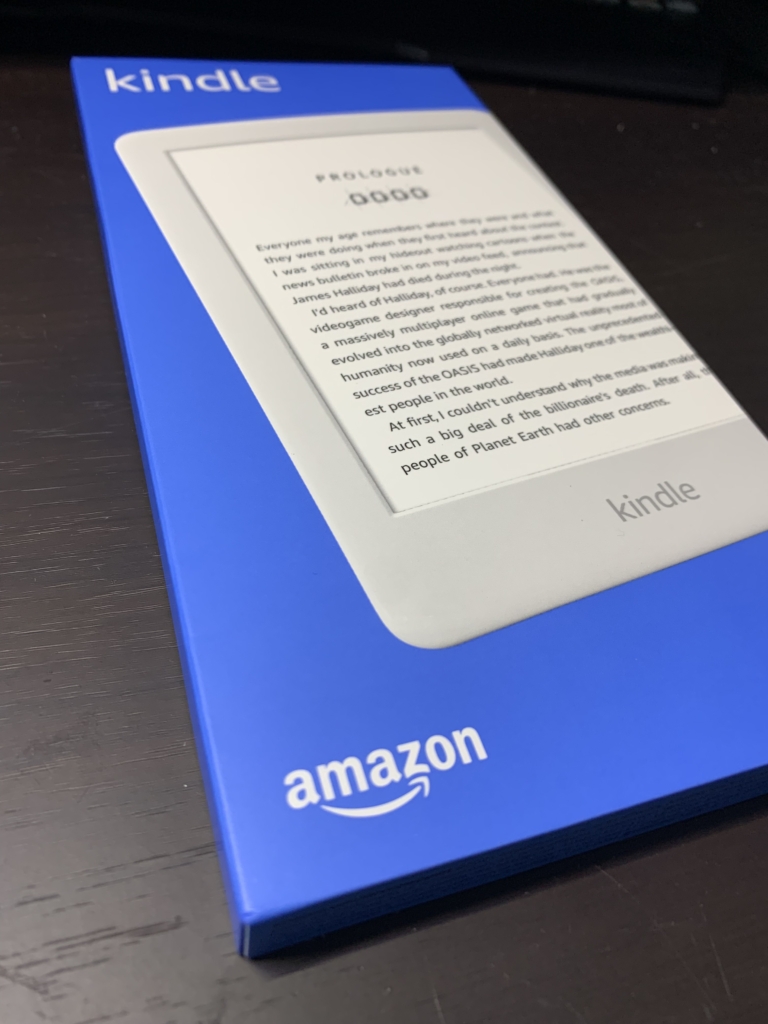
    What Is the Basic Kindle Actually Like?

    I’d been wanting to read at night, and with Amazon Black Friday on, I decided to buy a Kindle.

    The thing is, there are about four Kindle variants to choose from.

    I used to have a Kindle Paperwhite from a few years back, and the screen was so easy on the eyes even after long stretches that I was leaning toward that one again. But I saw that the basic Kindle also gets good reviews, and since I just plan to use it hard and only read at night, I figured the cheaper one would do and went with the plain Kindle.

    For Black Friday it was marked down from about 9,000 yen to about 5,000 yen.
    On top of that, buying a Kindle device gets you three months of Kindle Unlimited (normally 980 yen/month) for free, so effectively I paid around 2,000 yen for the device.
    What a deal!!!!

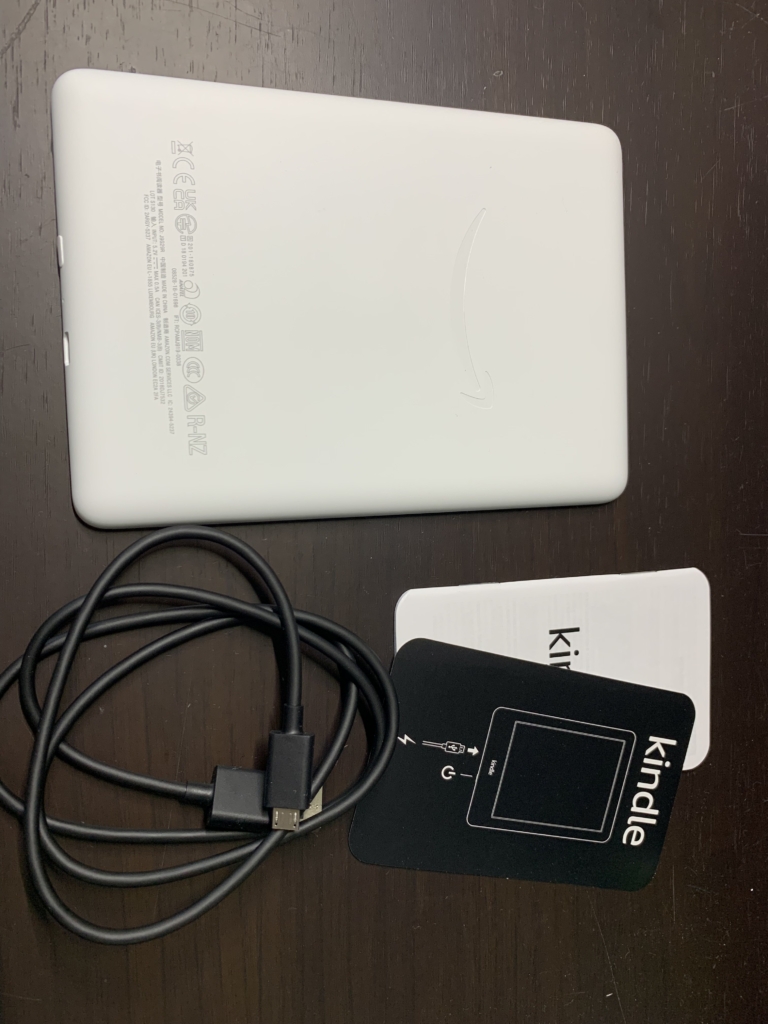
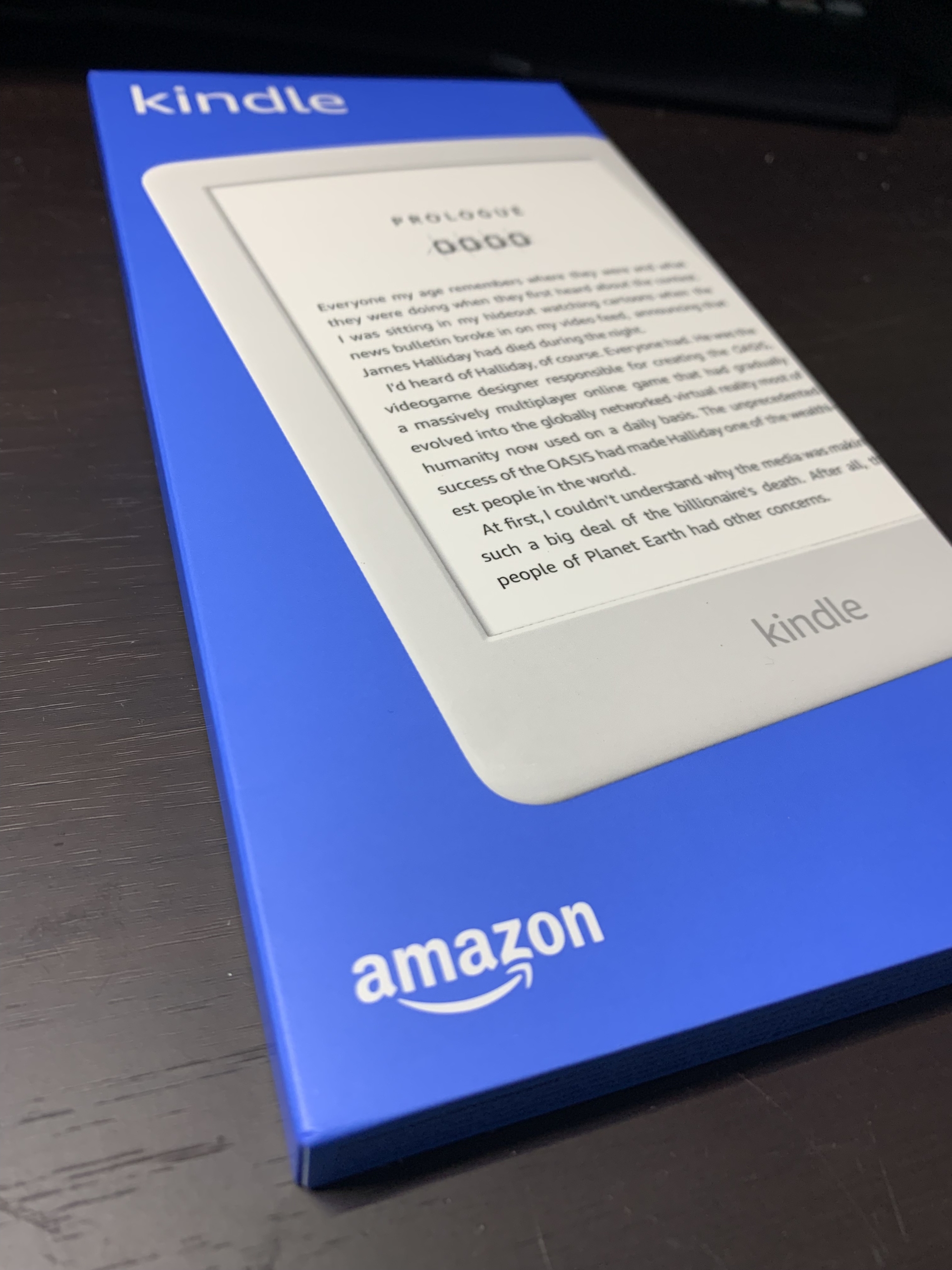
    Here’s the actual Kindle.

    The first thing that struck me when the box arrived was how incredibly thin it is.

    The contents are simple: a charging cable, the device itself, and a manual.
    The cable is micro-USB, which is a bit inconvenient now that USB-C is everywhere, but since you only need to charge about once a week, it’s really not a drawback.

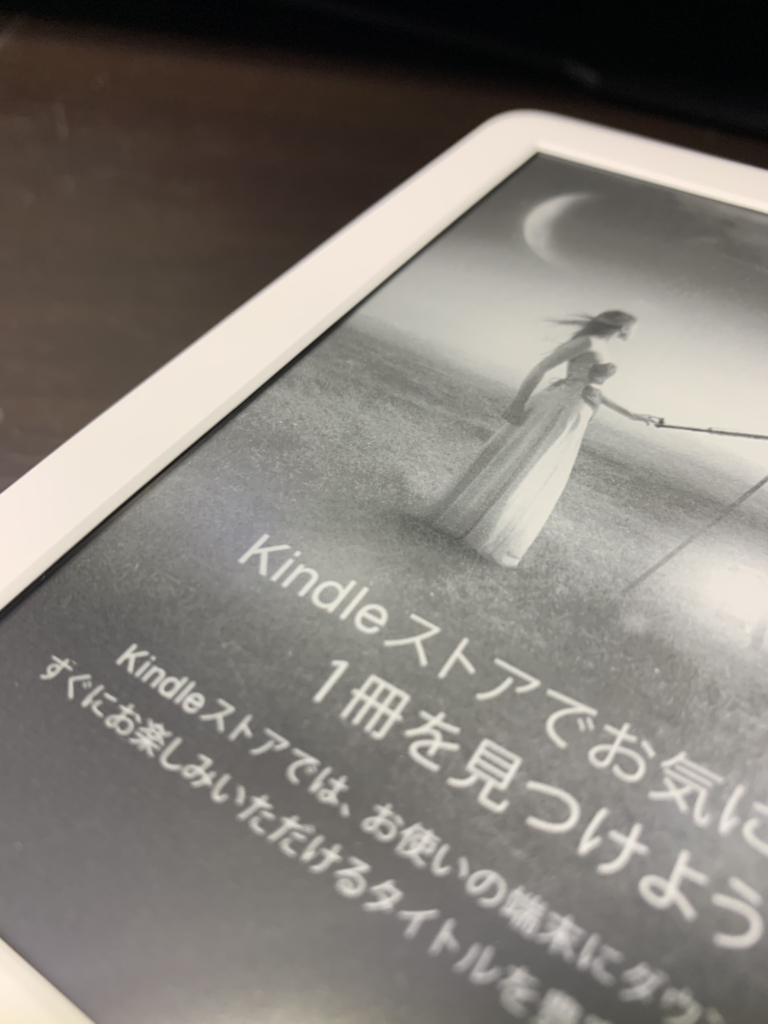
    Unlike the Kindle Paperwhite, the screen uses a front light and has a lower resolution on paper, but you’d only notice that in a side-by-side comparison; in practice the image quality is more than enough for reading.

    Reflections are also kept well in check, and reading at night doesn’t tire my eyes at all. My first impression was that it’s better than I expected.

    What I disliked most about the old Kindle Paperwhite was how sluggish it was; searching for books or turning pages was fairly stressful. This Kindle is noticeably faster than that, roughly like using a slightly older smartphone.

    Given the price gap, whether the other models are worth more than twice as much really depends on the person, but the basic Kindle offers excellent value and works well as an everyday device.

    And because it was cheap, I can use it as hard as I like. I feel like I made a really good purchase.

    You should all go buy one too—kattemitekudasai.

  • PC or PS5 for Gaming?

    PC or PS5 for Gaming?

    When you decide to play APEX, Call of Duty, or other big-name titles, you’ll probably wonder whether to play on a PC or buy a PlayStation 5.
    As someone who owns both, I’d like to walk through the advantages of each and who I’d recommend them to.

    About gaming PCs

    Who they suit
    ・People who want to do plenty of things besides gaming
    ・People who plan to stream their gameplay
    ・People who can spend a fair amount of money

    The biggest advantage of a gaming PC is, without a doubt, that you can customize it to your own taste.
    You can pick your own parts and build it yourself, or you can buy a pre-built machine from a shop like Dospara.

    The more you spend, the higher-performance a PC you can build.
    If you want to game in 4K, expect to pay at least around 200,000 yen for a full setup.
    That works out to roughly 150,000 yen for the PC itself, plus about 50,000 yen for accessories like a display and mouse.

    It costs money, but you can add lighting, fuss over your peripherals, and really express your own style.
    Choosing a PC also requires a certain amount of knowledge, so you’ll deepen your understanding of computers along the way.

    Speaking from experience, the knowledge I picked up while building my own PC has come in handy in all sorts of situations—I can do a quick diagnosis when a friend’s PC acts up, and I can handle maintenance on my own machine myself.

    Also, since it’s a computer at heart, you can do things other than gaming.
    In particular, programming requires a machine with reasonably good specs, and a gaming PC easily clears that bar.

    Some people may worry about game availability, but you can generally buy games on a site called Steam.
    Most of the well-known titles sold on the PlayStation Store are also available on Steam.
    So there’s not much to worry about.
    If anything, you can also play PC-exclusive games, which greatly widens your options.

    Next, about the PS5 (home game consoles)

    Recommended for
    ・People who aren’t comfortable with computers or electronics
    ・People who just want to play games
    ・People who don’t want to spend that much
    ・People who want to play with friends

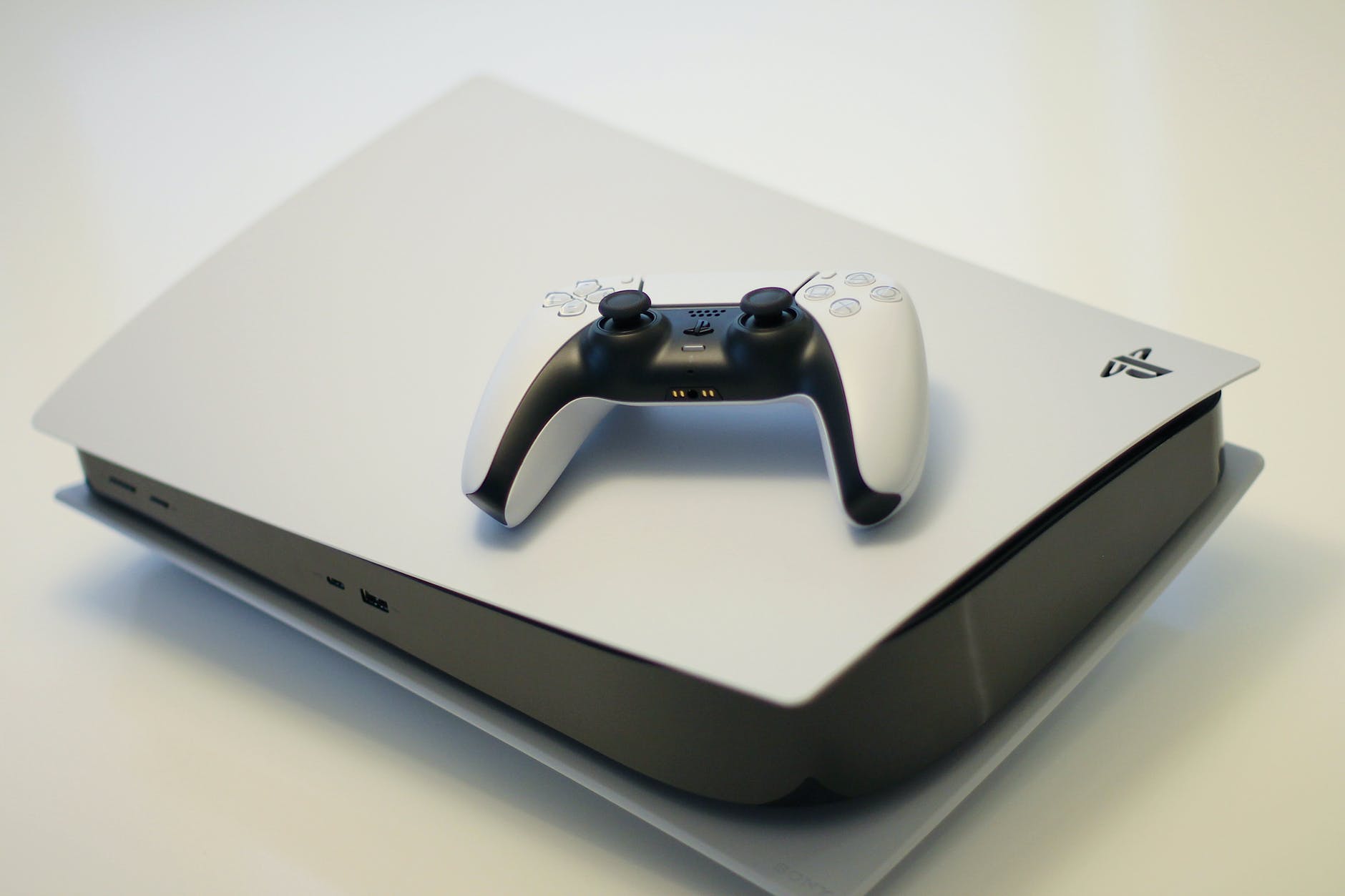
    Here I’ll use the PS5 as my example.
    PlayStation has a friends feature, which makes it extremely easy to play games while chatting over voice.
    Because it’s a dedicated gaming machine, these gaming-oriented features are very easy to use.

    By buying games on disc, you can sell them at a used shop like Book Off once you stop playing, which saves you money overall.

    The console is also smaller than a PC, and a single unit draws less power than a PC. (PCs consume about as much electricity as a hair dryer at this point.)

    It doesn’t get brought up much, but the thing I personally liked best was how the controller feels to use.

    You can use a PS5 controller on a PC too, but problems come up easily—you have to remap buttons, and connecting wirelessly introduces lag, so I ended up using a wired connection. On the PS5, I barely noticed any lag even over a wireless connection.
    You might think that goes without saying, though.

    Precisely because it’s a dedicated gaming machine, it’s inexpensive, yet its gaming performance is on par with a PC costing around 300,000 yen—I honestly have no idea how they pull it off.
    The PS5 is built to unbelievably high specs.

    This has only been a small slice of the comparison, but I hope it helps you see which one is right for you.
    Personally, I think deciding based on your purpose—whether you just want to game or want to do other things too—leads to the decision you’ll feel best about.

  • I bought an electric air duster. Seriously, it’s amazing

    Air dusters come in handy in all sorts of situations—working on a computer, tinkering with junk parts, messing with electronic circuits, and more.
    The problem is that a single can is surprisingly expensive and runs out almost immediately.
    On top of that, disposing of the cans is a hassle.

    So while air dusters are highly versatile, they also come with plenty of drawbacks.
    My can had just run out, and while shopping online for a replacement, I came across an electric air duster.

    Being electric, I was skeptical about whether it could match the power of a canned air duster and whether it would really be practical.
    The reviews were fairly good, though, with many comments saying it was stronger than expected.

    It was about 7,000 yen, so I decided to just go ahead and buy one.

    It’s the Sanwa Supply electric air duster.

    The first thing that surprised me when I used it was just how strong the air pressure is—more than enough.
    It has enough force to blow an ordinary sheet of paper away, which is more than sufficient for clearing dust off a computer.

    The battery lasts a long time, and unlike a canned duster, it never gets cold and loses power when you keep it running.

    The unit charges via USB Type-C, and a cable is included.
    These days a Type-C cable is surprisingly useful to have around, so that’s a nice bonus.

    One drawback is that the response is a bit slow.
    After you press the switch, it ramps up over about a second, and it takes one or two seconds to reach full power.
    You end up going “hmm, hmmm…” while you wait.

    I’ve uploaded a video so you can see the power and the response for yourself.

    https://youtu.be/Nu6S6vfROhg

    For me, the slow response isn’t stressful at all, and there’s no situation where I’d need faster response, so
    this turned out to be a purchase I’m glad I made.

    Now I can say goodbye to disposing of cans, and I no longer have to worry about the cost of air dusters.
    I’d definitely recommend picking one up.

  • SONY or Panasonic for a vlog camera? A thorough comparison

    SONY or Panasonic for a vlog camera? A thorough comparison

    The word “Vlog” has become widely familiar, and it will likely keep spreading.
    Riding that wave, I decided I wanted to try making Vlogs myself, so I made up my mind to buy a new camera.

    One camera currently on the market built specifically for Vlogging is the
    Sony VLOGCAM ZV-1

    Panasonic DC-G100

    .
    Unlike a handheld camcorder, it is relatively compact and can be shot with one hand, and it makes it easy to capture advanced footage such as beautifully blurred backgrounds.

    The two cameras listed above are in almost the same price range, and both have more than enough features for Vlogging.
    Precisely for that reason, it is really hard to decide which one to buy.
    So let me compare the two and list their strengths and weaknesses.

    Sony VLOGCAM ZV-1

    Strong points

    ・A variety of video modes (you can switch instantly between product reviews, scenery, faces, etc.)
    ・Light (about 294 g)
    ・Two color options (the white one is cute…)
    ・Plenty of controls on the tripod grip
    ・Comes with a fluffy mic windscreen
    ・Wide zoom range
    ・Connects to the tripod without a cable, and the tripod buttons work
    ・Simple to operate

    Weak points

    ・Still photography isn’t the focus, so I wouldn’t expect much there
    ・No viewfinder
    ・Apparently it can overheat and shut down

    Panasonic DC-G100

    Strong points

    ・It’s a mirrorless camera, so you can swap lenses
    ・Solid photo features too (a good pick even for someone just getting into photography)
    ・The microphone is amazing!
    ・The screen is beautiful!
    ・The edge of the screen turns red while recording, so it’s easy to tell you’re rolling
    ・It has a viewfinder

    Weak points

    ・Heavier than the Sony
    ・The kit lens barely zooms
    ・There’s a cable between the tripod and the camera

    What defines the Sony VLOGCAM ZV-1:
    it’s easy to operate, so anyone can start Vlogging!
    A camera built purely for Vlogging!

    What defines the Panasonic DC-G100:
    an outstanding microphone for serious video work,
    plus more than enough photo capability

    What both cameras share is a full set of Vlogging features: image stabilization, eye autofocus, smartphone connectivity, 4K recording, and so on.
    Both were designed for people shooting Vlogs, so I don’t think you’d regret either choice.
    It really comes down to what extra capabilities you’re after.

    If you’re committed to Vlogging, or your Vlogs center on people, Sony’s VLOGCAM is a very strong choice.

    If you want to shoot stills as well as video, I’d go with Panasonic’s G100.

    That said, I normally shoot photos with a DSLR, and it’s a Canon, so the lenses aren’t compatible.
    That means with the Panasonic I’d have to buy new lenses whenever I wanted a different angle of view…

    How far can I really push the Panasonic’s photo features?
    That feels like it will be my deciding factor.
    Depending on how it goes, I might just switch from Canon to Panasonic… haha

    After that, all that’s left is to see and handle them in person at the store and go with my gut!

    I hope this is helpful to you all.

    Links
    Sony VLOGCAM ZV-1
    Panasonic DC-G100